
Debit Cards Vs. Credit Cards – The Pros and Cons
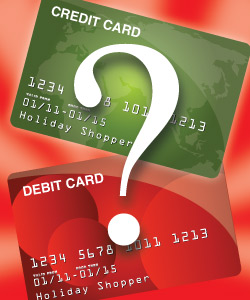
If you are like most Americans you probably have different types of plastic camping out in your wallet. Chances are that at least one of those cards is a debit card and at least one of them, and possibly many more, are credit cards.
Those plastic cards in your wallet are very similar in appearance. Each one typically displays a 16-digit card number, an expiration date, and a security code on the front or back. They also behave very similarly in the sense that they enable to you make purchases with ease and convenience. However, there are some considerable differences between debit cards and credit cards which you should understand.
Debit Card Pro: Debt Control
Perhaps the biggest pro which your debit card offers is that it is easier for most people to control from a budgetary standpoint. Most banks will only allow you to spend the funds that are available in your account when making purchases with your debit card. As a result, you will not go into debt by using your debit card.
Keep in mind, of course, that a debit card is not a cure-all for overspending. If you fail to follow a budget closely then spending too much with your easy-to-use debit card can still land you in hot water.
Debit Card Con: Not Always Accepted
Certain types of purchases or services may not be easily paid for if a debit card is your only choice of payment. Rental car companies, for example, will often require a credit card to be held on file if you wish to rent a vehicle. Even those rental companies that do accept a debit card for payment may require a large deposit, placing a hold on your account, and may even check your credit before allowing you to drive off the lot with a rental car sans a credit card on file for incidental expenses. Hotels often have similar requirements if you opt to pay with your debit card instead of a credit card. That’s why using a debit card for business travel is so difficult, because you have to have a large sum of money in the account, which isn’t the smartest use of the funds.
Credit Card Pro: Fraud Protection
Although there are laws in place to protect you from fraudulent charges on both debit and credit card accounts, there is no doubt that credit cards offer the best fraud protections. When debit card fraud occurs your rights are protected under the Electronic Funds Transfer Act (EFTA). For credit card fraud your protections come from the Fair Credit Billing Act (FCBA).
According to the EFTA you have to report any fraudulent debit card activity within a mere 2 days if you want to enjoy the $50 liability limit. After 2 days, your potential liability for fraudulent charges jumps to $500. If you fail to report fraudulent transactions for more than 60 days then you could be personally responsible for the full amounts stolen from your account.
By contrast, the FCBA caps your maximum liability for fraudulent transactions at $50 and the 4 major credit card networks all currently waive this as a matter of customer service. You still need to report the fraud within 60 days, but if you miss that 60 day window a card issuer might still allow you to dispute the charge. Additionally, unlike a debit card where your personal funds will be unavailable while your bank sorts out disputed charges, with disputed credit card charges it is the card issuer’s funds which are impacted during the investigation process.
Credit Card Con: Easy Temptation
If you have problems with impulse purchases, overspending, or budgeting then credit cards may represent an unavoidable temptation. In truth, it is just as easy to overspend with a debit card as it is with a credit card, but because your credit card account probably has a larger available limit than the available funds in your bank account you might make the mistake of overspending at a higher level. This temptation can often be avoided, however, by simply locking your credit cards up at home in a safe place in order to make impulse purchasing a little more difficult.