
How Often Does Your Credit Score Get Updated?
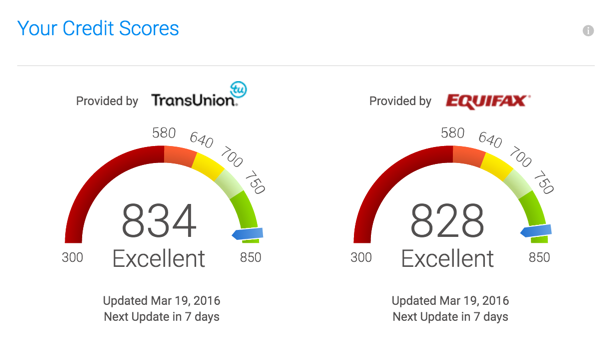
Just like you watch the number on the scale whenever you are trying to lose weight, if you are trying to improve your credit then you are probably watching your credit scores closely. Credit scores can be a useful way to track your progress whenever you are making strides to improve your credit reports. However, just because you pay off an account or you get a creditor to agree to correct an error on your credit reports does not mean your credit scores are going to update immediately. In fact, it may sound crazy but your credit scores do not actually update at all.
Update vs. Recalculate
Your credit scores are not a permanent part of your credit reports and, as such, they do not get updated like your accounts get updated. Instead, they are recalculated each time they are requested. While the 2 terms may sound similar, it is worth digging in deeper in order to understand the difference.
Your credit reports can and will absolutely be updated whenever the information changes. Your scores do not constantly fluctuate up or down in the background whenever the data on your reports is updated, like a thermometer.
Rather, your credit scores are recalculated whenever someone purchases them. Those scores will generally accompany your credit report as an add-on product. After your scores are delivered to you or to the lender who purchased them, they are discarded. They are not stored and, unless you keep a copy for your own records or they’re tracked by a 3rd party, there would generally be no way for you to look back and see a historical track record of your credit scores over time.
Why You May Have to Wait for a Different Score Calculation
Credit scores primarily help lenders more easily understand your level of risk and they are based solely on the data reflected on your credit reports. Therefore, if you are working to improve your credit scores then you will have to wait for the information on your credit reports to improve first.
Your credit reports do not update in real time. Just because you pay off a credit card balance today (a positive move from a credit score perspective) that does not mean your credit reports are going to reflect a zero balance immediately. Instead, you will have to wait until your card issuer sends the credit bureaus an update which displays your new $0 balance.
Current accounts are typically updated once a month. In the case of a credit card account your card issuer will report your balance and account history to the credit bureaus shortly after what is known as your statement closing date. If you have a $0 balance on the statement closing date then your card issuer will report a $0 balance to the credit bureaus that month. The updated balance will remain at $0 for a whole month, until your next statement closing date when the account is updated again.
If your credit scores are purchased while your card balance is reflecting a $0 on your credit reports then the score impact would likely be positive. However, if you purchase your scores again the following month and the account balance on your report was higher, you might receive a lower credit score at that time. The fluctuation in the information on your credit reports is one of the primary reasons why your credit scores might be one number this month and entirely different the following month.